First Month of Pregnancy Symptoms and Care
Early Signs, Health Tips, and Medical Guidance
The first month of pregnancy is an exciting yet delicate time for every woman. Many women start noticing subtle body changes even before confirming pregnancy through a test. Understanding the early pregnancy symptoms, physical changes, and proper care during the first month is essential for ensuring a healthy pregnancy journey.
Early awareness also helps women seek timely guidance from experienced specialists such as Dr. Nikita Trehan at Sunrise Multispeciality Hospital, where comprehensive pregnancy care and advanced gynecological services are provided.
This detailed guide explains the most common symptoms of pregnancy in the first month, week-by-week changes, health tips, diet recommendations, and when to consult a doctor.
Understanding the First Month of Pregnancy
The first month of pregnancy usually starts from the first day of your last menstrual period (LMP). During this time, a sperm fertilizes the egg, and the fertilized egg slowly travels through the fallopian tube to reach the uterus. After reaching the uterus, it attaches to the uterine wall. This process is called implantation and it starts the pregnancy.
In the first month, the baby is still very tiny, but the mother’s body begins to change to support the pregnancy. Hormones in the body increase, which can cause early pregnancy symptoms like tiredness, nausea, and breast tenderness.
Many women may not realize they are pregnant in the beginning. Most women start to suspect pregnancy when they miss their monthly period.
If you notice these early signs, it is a good idea to consult an experienced gynecologist, such as Dr. Nikita Trehan at Sunrise Multispeciality Hospital for proper pregnancy guidance.
Key Developments in the First Month
During the first month of pregnancy, several important things happen inside the body:
- The egg is fertilized by sperm.
- A tiny baby called an embryo begins to form.
- The embryo attaches to the lining of the uterus.
- The placenta starts developing to support the baby.
- Pregnancy hormones increase, which can cause early pregnancy symptoms.
These early developments are very important because they lay the foundation for the baby’s growth during the rest of the pregnancy.
Week-by-Week Pregnancy Changes in the First Month
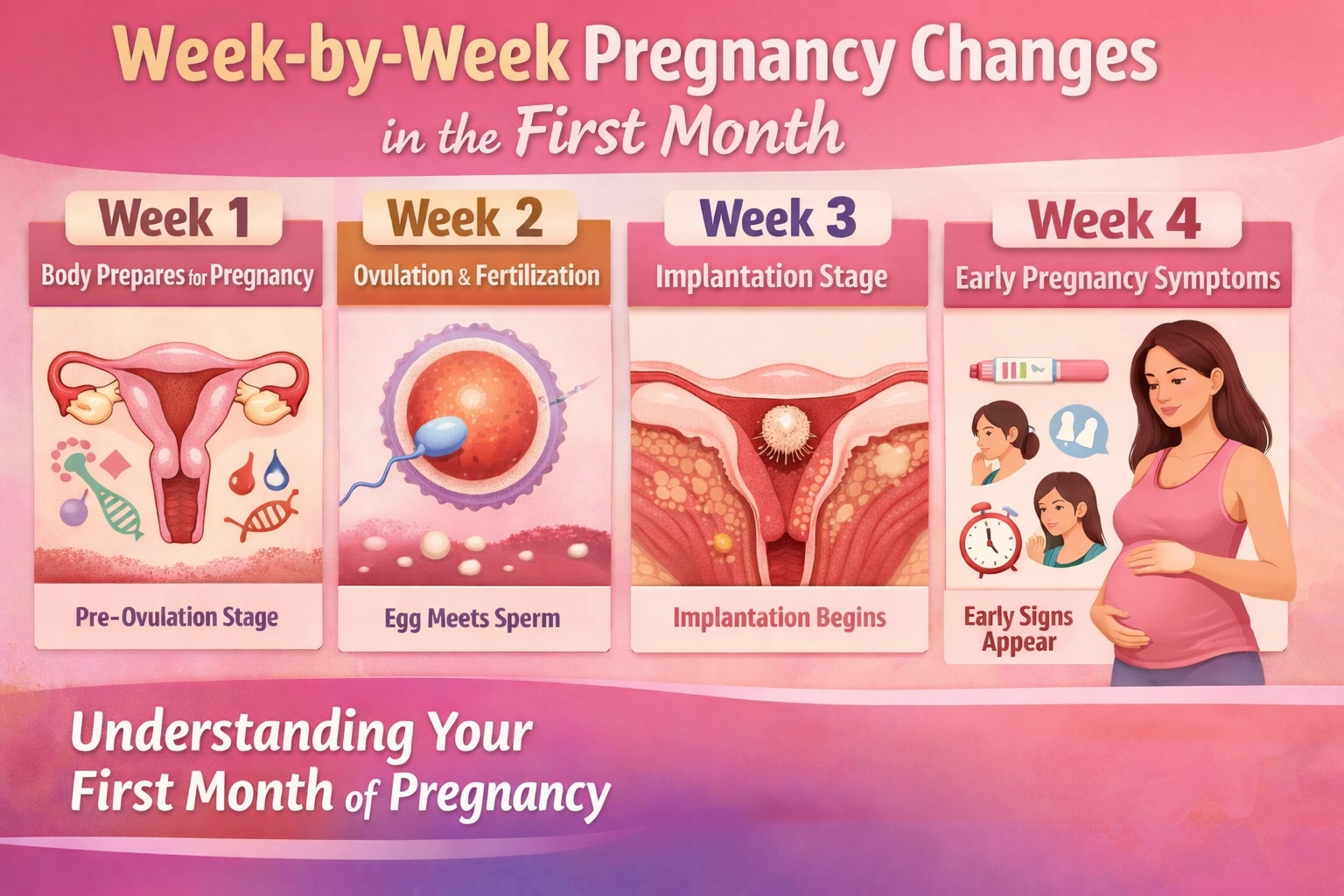
Week 1: Body Preparing for Pregnancy
Doctors count pregnancy from the first day of the last menstrual period, even though the baby has not formed yet.
During this week:
- The body prepares for ovulation.
- Hormones start controlling the reproductive cycle.
- The uterus lining becomes thicker to support a future pregnancy.
- Most women do not feel any pregnancy symptoms at this stage.
Week 2: Ovulation and Possible Fertilization
Around the second week, ovulation happens, which means the ovary releases an egg.
Important things that may happen:
- The ovary releases an egg.
- If sperm meets the egg, fertilization can occur.
- The fertilized egg starts moving toward the uterus.
Some women may notice:
- Mild pain or discomfort in the lower abdomen
- More cervical mucus (vaginal discharge)
- A slight increase in body temperature
Week 3: Implantation Stage
In the third week, the fertilized egg reaches the uterus and attaches to the uterine lining. This process is called implantation and it officially starts the pregnancy.
Possible symptoms during this time include:
- Light spotting or implantation bleeding
- Mild stomach cramps
- Breast tenderness or sensitivity
- Hormonal changes in the body
During this stage, the pregnancy hormone hCG (human chorionic gonadotropin) begins to increase. This hormone is what pregnancy tests detect.
Week 4: Early Pregnancy Symptoms Start
By the end of the first month, many women start noticing early pregnancy symptoms.
Common signs include:
- Missed menstrual period
- Feeling very tired or fatigued
- Nausea or morning sickness
- Mood swings or emotional changes
- Frequent urination
At this stage, many women take a home pregnancy test or visit a doctor to confirm pregnancy. For proper guidance and early pregnancy care, consulting an experienced specialist such as Dr. Nikita Trehan at Sunrise Multispeciality Hospital can help ensure a healthy pregnancy journey.
Common Symptoms of Pregnancy in the First Month
Missed Period
The most common and earliest sign of pregnancy is a missed menstrual period. If your period is late and you are sexually active, it may be a sign that you are pregnant.
However, a missed period does not always mean pregnancy. It can also happen because of stress, hormonal changes, weight changes, or certain health conditions.
Fatigue and Tiredness
Many women feel very tired or low on energy during the early weeks of pregnancy.
This happens because:
- The hormone progesterone increases in the body.
- The body starts working harder to support the growing embryo.
- The body begins to produce more blood for the baby.
Getting enough rest, eating healthy food, and staying hydrated can help reduce tiredness.
Nausea and Morning Sickness
Some women start feeling morning sickness during the first month, although it usually becomes more common in the second month of pregnancy.
Common symptoms include:
- Feeling nauseous
- Vomiting
- Not liking certain foods or smells
- Strong sensitivity to odors
Eating small meals several times a day and avoiding strong smells can help manage nausea.
Breast Changes
Hormonal changes in pregnancy can cause noticeable changes in the breasts.
Women may experience:
- Breast tenderness or soreness
- Swelling in the breasts
- Darkening of the area around the nipples (areolas)
- A tingling or heavy feeling
These changes help prepare the body for breastfeeding later in pregnancy.
Frequent Urination
During early pregnancy, increased blood flow and hormonal changes can make women feel the need to urinate more often.
Although this symptom becomes more noticeable later in pregnancy, some women experience frequent urination in the first month itself.
Mood Swings
Pregnancy hormones can affect emotions and mood.
Women may feel:
- Irritable or easily upset
- More emotional than usual
- Anxious or worried
- Overwhelmed by small things
These mood changes are normal during pregnancy and usually improve with time.
Mild Cramping
Some women may feel mild cramps in the lower abdomen during early pregnancy. This can happen when the fertilized egg attaches to the uterus.
However, if there is severe pain, heavy bleeding, or strong cramps, it is important to see a doctor immediately for medical advice.
Early Pregnancy Signs Before a Missed Period
Some women may notice early pregnancy symptoms even before their period is late. These early signs can happen because the body starts changing soon after the egg is fertilized.
Common early pregnancy signs before a missed period include:
- Implantation bleeding (light bleeding when the fertilized egg attaches to the uterus)
- Slight increase in body temperature
- Light spotting or small amount of bleeding
- Food cravings or sudden dislike for certain foods
- Bloating or feeling of fullness in the stomach
These early pregnancy symptoms can be different for every woman. Some women may notice many signs, while others may not feel any symptoms at all in the beginning.
Physical Changes in the Body During the First Month
During the first month of pregnancy, the body slowly begins preparing to support the growing baby. These early pregnancy changes in the body happen because hormones start increasing and the body begins adjusting to pregnancy.
Important changes include:
Hormonal Changes
During early pregnancy, pregnancy hormones increase quickly in the body. These hormonal changes can affect energy levels, mood, metabolism, and overall body functions. Many women may start noticing early pregnancy symptoms such as fatigue, mood swings, nausea, and breast tenderness.
Increase in Blood Volume
In the first month of pregnancy, the body starts producing more blood to support the developing baby. This extra blood helps provide oxygen and nutrients to the embryo, which is important for healthy fetal development.
Metabolic Changes
During early pregnancy, the body’s energy needs increase because it is supporting both the mother and the growing baby. Because of this, healthy nutrition, a balanced pregnancy diet, and proper hydration become very important for a healthy pregnancy.
Important Pregnancy Care Tips for the First Month
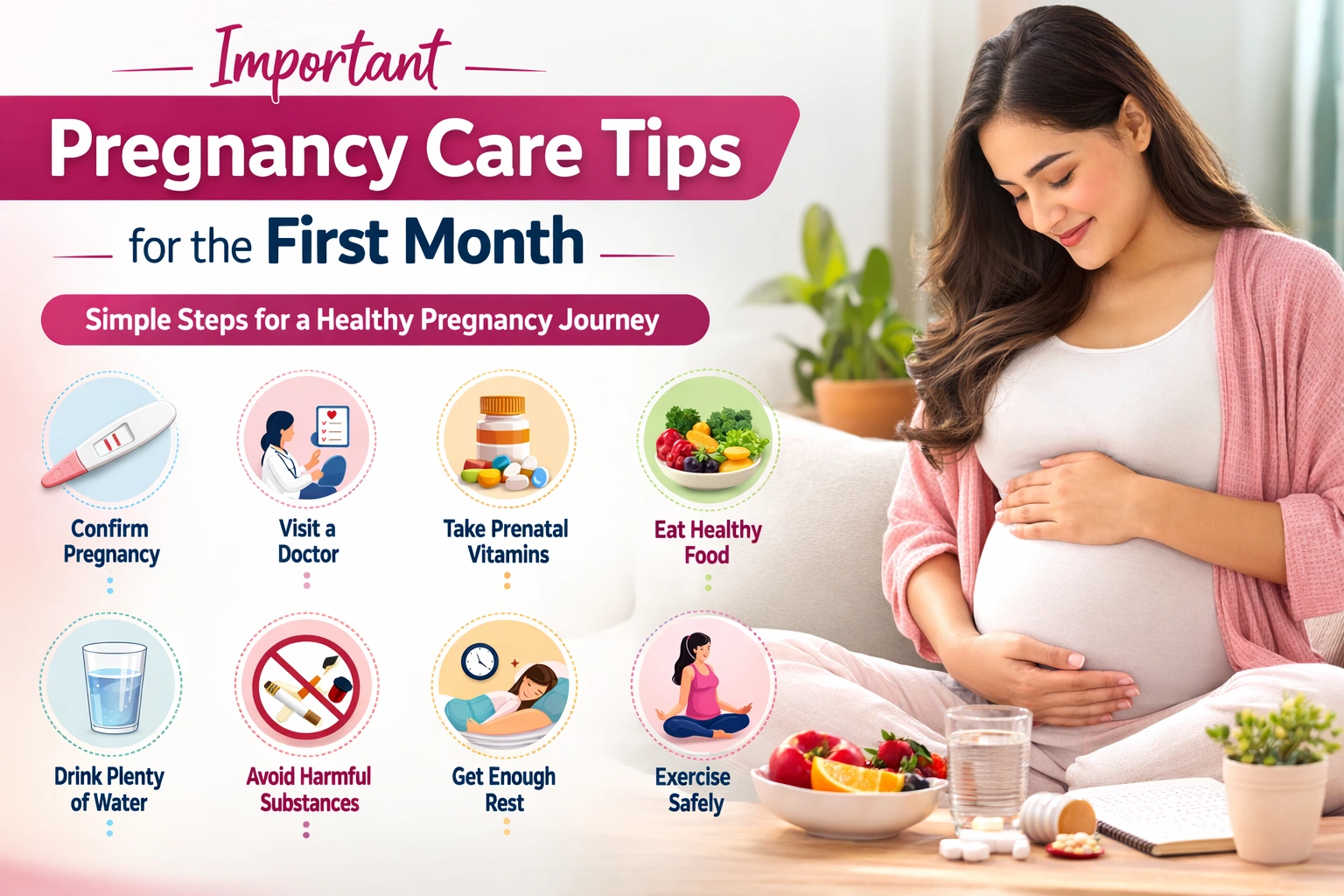
Taking proper care during the first month of pregnancy is very important for the health of both the mother and the baby. Early pregnancy care and medical guidance help ensure a healthy pregnancy journey.
1. Confirm Pregnancy with a Test
If you think you may be pregnant, the first step is to confirm pregnancy with a test. You can take a home pregnancy test or visit a doctor for confirmation.
Doctors may also suggest:
- Blood tests for pregnancy
- Early pregnancy ultrasound
These tests help confirm pregnancy and check if everything is normal.
2. Schedule a Doctor Consultation
It is important to visit a gynecologist early in pregnancy. An early consultation helps the doctor monitor pregnancy and detect any health risks.
Pregnancy specialists at Sunrise Multispeciality Hospital provide complete pregnancy checkups, prenatal care, and expert guidance for expecting mothers.
3. Start Prenatal Vitamins
Doctors usually recommend prenatal vitamins during early pregnancy to support the baby's growth.
Common supplements include:
- Folic acid
- Iron supplements
- Calcium
- Vitamin D
Folic acid is especially important because it helps prevent certain birth defects in the baby’s brain and spine.
4. Maintain a Healthy Pregnancy Diet
Eating a healthy pregnancy diet in the first month helps support the baby's early development.
Include foods such as:
- Fresh fruits
- Green vegetables
- Whole grains
- Protein-rich foods
- Milk and dairy products
Try to avoid processed foods, junk food, and too much sugar during pregnancy.
5. Stay Hydrated
Drinking enough water is very important during pregnancy. Proper hydration helps:
- Prevent dehydration
- Improve blood circulation
- Support the baby’s development
Doctors usually recommend drinking plenty of water throughout the day.
6. Avoid Harmful Substances
Certain substances can harm the developing baby and should be avoided during pregnancy.
Pregnant women should avoid:
- Alcohol
- Smoking
- Unprescribed medications
- Raw or undercooked food
Avoiding these harmful substances helps reduce the risk of pregnancy complications.
7. Get Enough Rest
Rest and sleep are very important during early pregnancy. Many women feel tired and low on energy in the first month because the body is adjusting to pregnancy.
Getting adequate sleep and relaxation helps the body recover and maintain a healthy pregnancy.
8. Exercise Lightly and Safely
Light physical activities can help maintain good health during pregnancy.
Safe exercises may include:
- Walking
- Prenatal yoga
- Light stretching
However, it is always best to consult a doctor before starting any exercise routine during pregnancy to ensure it is safe for both mother and baby.
Diet Plan for the First Month of Pregnancy
Eating the right foods during the first month of pregnancy is very important for the healthy growth and development of the baby. A healthy pregnancy diet gives the body the nutrients it needs and supports early fetal development.
Recommended Foods
A balanced pregnancy diet in the first month should include healthy and nutritious foods such as fruits, vegetables, protein sources, and dairy products.
Fruits
Fruits are rich in vitamins, minerals, and antioxidants that support a healthy pregnancy.
Healthy fruit options include:
- Bananas
- Apples
- Oranges
- Berries
These fruits help provide energy, fiber, and important vitamins during early pregnancy.
Vegetables
Vegetables are an important part of a healthy pregnancy diet because they provide essential nutrients and fiber.
Healthy vegetables include:
- Spinach
- Broccoli
- Carrots
- Sweet potatoes
These vegetables are rich in iron, folic acid, and vitamins that support the baby’s development.
Protein Sources
Protein helps in the growth and development of the baby’s cells and tissues.
Good protein sources include:
- Eggs
- Lentils
- Chicken
- Fish (low mercury)
These foods provide important nutrients needed during early pregnancy.
Dairy Products
Dairy foods are important because they provide calcium and protein, which help in the development of the baby’s bones and teeth.
Healthy dairy options include:
- Milk
- Yogurt
- Cheese
Including these foods in your first month pregnancy diet plan helps provide the essential nutrients needed for a healthy pregnancy and proper baby growth.
Foods to Avoid During Early Pregnancy
During early pregnancy, some foods can be harmful to the mother and the developing baby. Following a safe pregnancy diet in the first month helps reduce the risk of infections and pregnancy complications.
Avoid These Foods
Certain foods should be avoided during the first month of pregnancy because they may affect the baby’s health.
- Raw seafood
- Unpasteurized dairy products
- Too much caffeine
- Processed or undercooked meat
- Alcohol
Avoiding these foods helps lower the risk of food infections, pregnancy complications, and problems in fetal development, ensuring a healthy and safe pregnancy.
When to See a Doctor During Early Pregnancy
During the first month of pregnancy, mild symptoms like nausea, tiredness, and mood changes are common. However, some early pregnancy warning signs may need immediate medical attention.
You should consult a pregnancy doctor or gynecologist immediately if you notice any of the following symptoms:
- Heavy bleeding
- Severe pain in the lower abdomen
- High fever
- Continuous or severe vomiting
- Dizziness or fainting
Getting early medical care during pregnancy helps protect the health of both the mother and the developing baby. If you notice any unusual symptoms, it is important to seek advice from an experienced specialist such as Dr. Nikita Trehan at Sunrise Multispeciality Hospital for proper diagnosis and safe pregnancy care.
Importance of Early Prenatal Care
Early prenatal care during pregnancy is very important for the health of both the mother and the developing baby. Regular pregnancy checkups help doctors monitor the pregnancy and make sure everything is progressing normally.
Benefits of Early Prenatal Care
Early pregnancy care provides several important benefits, including:
- Early detection of pregnancy complications
- Monitoring the baby’s growth and fetal development
- Guidance on healthy pregnancy diet and nutrition
- Important pregnancy screening tests
Regular prenatal checkups with a qualified gynecologist help ensure a safe, healthy, and well-monitored pregnancy journey for both mother and baby.
Lifestyle Tips for a Healthy First Month of Pregnancy
Following a healthy lifestyle during the first month of pregnancy is very important for the well-being of both the mother and the developing baby. Simple daily habits can help support a safe and healthy pregnancy.
Manage Stress
Try to stay calm and relaxed during early pregnancy. Relaxation techniques like meditation, deep breathing, and light yoga can help reduce stress and anxiety and support overall pregnancy health.
Avoid Heavy Lifting
During the first month of pregnancy, it is important to avoid lifting heavy objects. Too much physical strain can put pressure on the body, so gentle activities and proper rest are recommended.
Maintain Good Hygiene
Maintaining good personal hygiene during pregnancy helps prevent infections. Washing hands regularly, eating clean food, and keeping your surroundings clean are important for a healthy pregnancy.
Track Pregnancy Symptoms
Keeping a record of early pregnancy symptoms such as nausea, fatigue, or mood changes can help doctors understand how the pregnancy is progressing. This also helps during regular pregnancy checkups with your doctor.
Why Early Pregnancy Awareness Is Important
Knowing and understanding early pregnancy symptoms is very important for every woman. Early awareness helps women recognize pregnancy signs and take the right steps for a healthy and safe pregnancy.
Understanding the first signs of pregnancy helps women:
- Confirm pregnancy early with a pregnancy test
- Take important health precautions during early pregnancy
- Avoid harmful substances like alcohol, smoking, and unsafe foods
- Visit a doctor for early pregnancy checkups and medical care
Early awareness and proper guidance from a qualified gynecologist help improve pregnancy health, support baby development, and reduce the risk of pregnancy complications.
Expert Pregnancy Care in Delhi
For complete pregnancy care in Delhi, women can consult experienced specialists such as Dr. Nikita Trehan at Sunrise Multispeciality Hospital. The hospital provides expert medical support and guidance for women during every stage of pregnancy.
Services Offered
The hospital offers several advanced women’s health and pregnancy care services, including:
- Advanced prenatal care and pregnancy checkups
- High-risk pregnancy treatment and monitoring
- Laparoscopic gynecological surgery
- Fertility and reproductive health treatments
- Modern diagnostic and medical facilities
With experienced doctors, advanced medical technology, and personalized care, expecting mothers can receive safe, comfortable, and healthy pregnancy care throughout their pregnancy journey.
Conclusion
The first month of pregnancy is a very important stage because it builds the foundation for a healthy pregnancy journey. Understanding early pregnancy symptoms and following the right pregnancy care tips can help protect both the mother’s health and the baby’s development.
Eating a healthy pregnancy diet, avoiding harmful substances like alcohol or smoking, taking prenatal vitamins, and visiting an experienced gynecologist for pregnancy care are very important steps during early pregnancy.
If you think you might be pregnant or notice early pregnancy signs, it is best to seek professional medical advice. Consulting experienced specialists such as Dr. Nikita Trehan at Sunrise Multispeciality Hospital can help ensure a safe, healthy, and successful pregnancy journey.
Frequently Asked Questions (FAQs) About First Month of Pregnancy
1. What are the early symptoms of pregnancy in the first month?
The most common early pregnancy symptoms in the first month include missed period, nausea, tiredness, breast tenderness, mood changes, and frequent urination. Some women may also notice light spotting or mild cramps.
2. How can I confirm pregnancy in the first month?
You can confirm pregnancy by taking a home pregnancy test after a missed period. For accurate results, doctors may also recommend a blood pregnancy test or early pregnancy ultrasound at a hospital like Sunrise Multispeciality Hospital.
3. What should I do in the first month of pregnancy?
During the first month of pregnancy, you should:
- Start prenatal vitamins like folic acid
- Eat a healthy pregnancy diet
- Drink enough water
- Avoid alcohol, smoking, and harmful foods
- Schedule an early pregnancy checkup with a gynecologist
4. When should I visit a doctor after a positive pregnancy test?
You should visit a pregnancy doctor or gynecologist as soon as you confirm pregnancy. Early consultation helps monitor the baby’s growth and ensures proper prenatal care and pregnancy guidance.
5. Is mild cramping normal in early pregnancy?
Yes, mild cramps in early pregnancy can be normal because the fertilized egg attaches to the uterus. However, if you experience severe pain or heavy bleeding, you should see a doctor immediately.
6. What foods should I eat during the first month of pregnancy?
A healthy first month pregnancy diet should include:
- Fruits and vegetables
- Whole grains
- Protein-rich foods
- Milk and dairy products
These foods provide important nutrients needed for healthy baby development.
7. What foods should I avoid in early pregnancy?
During early pregnancy, avoid:
- Alcohol
- Smoking
- Raw seafood
- Unpasteurized dairy
- Too much caffeine
Avoiding these foods helps reduce the risk of pregnancy complications.
8. Can I exercise during the first month of pregnancy?
Yes, light exercise during early pregnancy such as walking or prenatal yoga can be safe. However, always consult an experienced doctor like Dr. Nikita Trehan before starting any exercise routine.
9. How important is prenatal care in early pregnancy?
Early prenatal care is very important because it helps doctors:
- Monitor the baby’s development
- Detect pregnancy complications early
- Provide nutrition and health guidance
- Ensure a safe pregnancy journey
10. Which hospital is best for pregnancy care in Delhi?
For advanced pregnancy care, prenatal checkups, and high-risk pregnancy treatment, many women consult specialists at Sunrise Multispeciality Hospital, where experienced doctors provide comprehensive women’s health and maternity care.