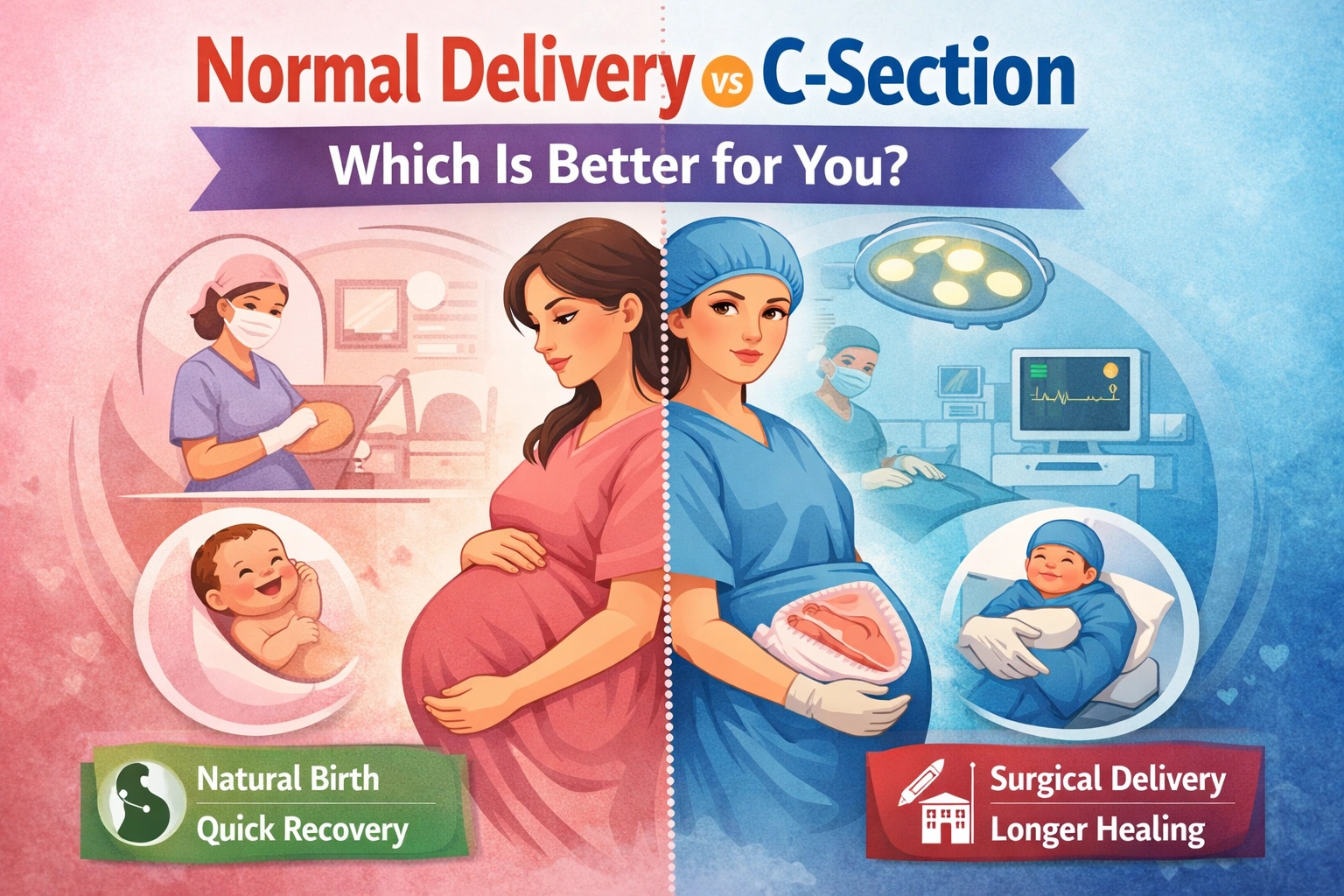
Normal Delivery vs C-Section: Which Is Better for You?
Choosing the right delivery method is one of the most important parts of pregnancy planning. Many expecting mothers search for answers to questions like normal delivery vs C-section, which is better, normal delivery or C-section, and normal delivery or C-section which is safe. The truth is that there is no single answer that fits every pregnancy. The best delivery method depends on the mother’s health, the baby’s condition, the progress of labor, and the doctor’s medical advice.
Some women hope for a normal delivery because it is natural, recovery is usually faster, and the hospital stay is often shorter. Others may need a C-section for safety reasons, especially if there are complications during pregnancy or labor. Both methods can be safe when done at the right time and for the right reason.
This guide explains the difference between normal delivery and C-section, their benefits, risks, recovery time, cost, and the situations in which doctors usually recommend one method over the other. If you are pregnant and trying to make an informed decision, this article will help you understand your options more clearly.
What Is Normal Delivery?
Normal delivery, also called vaginal delivery, is the process of giving birth through the birth canal. In this method, labor begins either naturally or is medically induced. The cervix gradually opens, contractions become stronger, and the baby is delivered vaginally.
Many women prefer normal delivery because it is a natural process and usually does not require surgery. When pregnancy is low-risk and labor progresses normally, normal delivery can be a safe and effective choice.
However, normal delivery is not always possible. In some pregnancies, complications may arise, or labor may not move forward as expected. In those cases, doctors may recommend a C-section to protect both mother and baby.
What Is a C-Section?
A C-section, short for cesarean section, is a surgical method of childbirth. The baby is delivered through an incision made in the abdomen and uterus rather than through the birth canal. It is a common and often life-saving procedure.
C-sections may be planned in advance or performed as an emergency during labor. A planned C-section is usually recommended when the doctor already knows that vaginal birth may be risky. An emergency C-section may be needed if labor becomes complicated or the baby shows signs of distress.
Although C-section delivery is safe when done by experienced doctors, it is still major surgery. That means the mother may need a longer recovery period and more careful post-delivery monitoring.
Normal Delivery vs C-Section: Key Differences
Understanding the difference between normal delivery and C-section can help you know what to expect.
Normal Delivery
- Baby is delivered through the vagina
- Labor usually begins naturally
- Recovery is often faster
- Hospital stay is usually shorter
- Less surgical risk
- Labor pain is more intense during birth
C-Section
- Baby is delivered through surgery
- May be planned or emergency
- Recovery usually takes longer
- Hospital stay is often longer
- Surgical risks are higher than vaginal birth
- Labor pain may be avoided, but post-surgery pain is common
Both methods are used in modern maternity care. The safest option depends on individual medical circumstances.
Which Is Better: Normal Delivery or C-Section?
This is the most common question among expecting mothers. The answer is simple: the better delivery method is the one that is safest for mother and baby.
In a healthy, low-risk pregnancy, normal delivery is often preferred because it has several advantages. Recovery is faster, pain after delivery may be less than surgery-related pain, and there is no abdominal incision.
However, a C-section is better when vaginal delivery may put the mother or baby at risk. For example, if the baby is in breech position, the placenta is blocking the birth canal, labor is not progressing, or there are serious health concerns, C-section may be the safest option.
So the question is not just whether normal delivery is better than C-section. The real question is: Which delivery method is medically suitable for your pregnancy?
Benefits of Normal Delivery
Normal delivery is often considered the first choice when it is medically safe. Here are some of its major benefits.
1. Faster Recovery
Most women recover more quickly after vaginal birth than after surgery. They may be able to walk, move, and care for the baby sooner.
2. Shorter Hospital Stay
Normal delivery usually requires less time in the hospital, which can make the overall experience easier for the mother and family.
3. Lower Risk of Surgical Complications
Since normal delivery is not surgery, there is no abdominal incision. This means the risk of wound infection, anesthesia-related issues, and surgical complications is lower.
4. Better for Early Mobility
After a normal delivery, mothers often regain movement more quickly. This can be helpful for breastfeeding, bonding, and overall recovery.
5. Natural Process
Many women feel emotionally satisfied with normal delivery because it follows the body’s natural labor process.
6. Lower Cost in Many Cases
Normal delivery often costs less than a C-section because it does not involve surgery or a longer hospital stay.
Risks and Challenges of Normal Delivery
Although normal delivery is natural and often preferred, it is not completely free from challenges.
1. Labor Pain
One of the biggest concerns is labor pain. Contractions can be intense, especially for first-time mothers.
2. Tearing or Episiotomy
Sometimes the vaginal area may tear during delivery, or the doctor may need to make a small cut to help the baby come out safely.
3. Labor May Stop or Slow Down
Not every labor progresses smoothly. If the cervix stops opening or the baby does not descend properly, a C-section may be required.
4. Stress on the Baby
In prolonged or difficult labor, the baby may experience distress, which can make emergency delivery necessary.
5. Not Suitable in Every Pregnancy
Some medical conditions make normal delivery unsafe, such as placenta previa, severe preeclampsia, or certain fetal positions.
Benefits of C-Section
A C-section may not be the first choice for every mother, but it is extremely important in many medical situations.
1. Safe in High-Risk Pregnancies
C-section is often recommended when pregnancy complications make vaginal birth unsafe.
2. Planned Delivery
If the surgery is scheduled, it can help doctors prepare better in advance and plan for a controlled delivery environment.
3. Helpful When the Baby Is in the Wrong Position
If the baby is breech or sideways, a C-section may be safer than attempting vaginal birth.
4. Avoids Labor Pain
The mother does not go through active labor contractions when a C-section is scheduled. This can be a relief in some cases, although recovery pain still follows.
5. Emergency Life-Saving Procedure
A C-section can protect both mother and baby in urgent situations such as fetal distress, cord prolapse, or heavy bleeding.
Risks and Challenges of C-Section
Since C-section is surgery, it carries some additional risks compared to normal delivery.
1. Longer Recovery Time
Healing after surgery takes more time. The mother may need several weeks to feel fully comfortable again.
2. Incision Pain
Pain around the surgical cut is common after delivery and may last for days or weeks.
3. Higher Risk of Infection
There is a risk of wound infection, uterine infection, or infection at the incision site.
4. More Blood Loss
C-sections may involve more blood loss than normal delivery in some cases.
5. Longer Hospital Stay
Many mothers stay in the hospital longer after a C-section to ensure proper recovery.
6. Impact on Future Pregnancies
A previous C-section may influence future delivery plans and may increase the need for surgical delivery later.
Which Delivery Is Less Painful?
This is another common question in pregnancy. The answer depends on when you measure the pain.
During Delivery
- Normal delivery: Labor pain is usually stronger during birth.
- C-section: Surgery is performed under anesthesia, so labor pain may be avoided.
After Delivery
- Normal delivery: Recovery pain is often milder and shorter.
- C-section: Post-surgery pain can be more noticeable and recovery may take longer.
So normal delivery may involve more pain during labor, while C-section may involve more pain during recovery.
Recovery Time: Normal Delivery vs C-Section
Recovery time is one of the biggest differences between these two delivery methods.
Normal Delivery Recovery
Recovery after vaginal birth is usually faster. Many mothers can move around sooner, breastfeed more comfortably, and resume light activities earlier.
Common post-normal delivery experiences may include:
- mild soreness
- bleeding for a few days or weeks
- fatigue
- stitches, if episiotomy or tearing occurred
C-Section Recovery
Since a C-section is surgery, healing takes longer. The mother may experience:
- abdominal pain
- difficulty standing or walking initially
- need for wound care
- longer rest period
- limited physical activity for some time
Doctors usually advise mothers to avoid lifting heavy objects, climbing stairs too often, or doing strenuous activity until the incision heals.
When Do Doctors Recommend C-Section?
Doctors may recommend a C-section in situations where normal delivery could be risky. Common reasons include:
- breech or transverse baby position
- placenta previa
- placental complications
- previous C-section in certain cases
- twin or multiple pregnancy
- fetal distress
- labor not progressing
- severe blood pressure problems
- gestational complications
- umbilical cord issues
- large baby size in some cases
- maternal medical conditions
Every pregnancy is different, so the reason for a C-section should always be discussed clearly with your gynecologist.
Can You Choose Normal Delivery Instead of C-Section?
Sometimes, yes. If the pregnancy is low-risk and the doctor agrees, a mother may be able to plan for normal delivery even if there are concerns. However, the decision must be based on medical safety, not preference alone.
If a doctor recommends C-section because normal delivery could be dangerous, it is usually best to follow that advice. The priority is always safe childbirth for both mother and baby.
Is Normal Delivery Safer Than C-Section?
In many low-risk pregnancies, normal delivery is considered safer because it avoids surgery. But C-section may be safer in high-risk situations.
The safest method is the one that matches your medical condition:
- Normal delivery is often safer when pregnancy is uncomplicated
- C-section is safer when complications are present
This is why routine prenatal checkups are so important. They help doctors monitor your condition and recommend the right delivery approach at the right time.
Cost of Normal Delivery vs C-Section in Delhi
Cost is another major factor families consider. In general, normal delivery usually costs less than C-section because it does not require surgery.
Normal Delivery Cost Factors
- doctor’s consultation
- labor room charges
- hospital stay
- medicines
- monitoring during labor
C-Section Cost Factors
- surgery charges
- anesthesia
- operation theatre use
- longer hospital stay
- additional medicines
- post-surgery care
The final cost depends on the hospital, room category, doctor’s expertise, medical condition, and whether any complications arise. It is always better to focus on safe and quality care rather than choosing only on the basis of price.
How to Improve the Chances of Normal Delivery
Not every delivery can or should be normal, but certain healthy habits may support a smoother pregnancy and labor process.
1. Attend Regular Checkups
Prenatal visits help detect problems early and keep pregnancy under proper monitoring.
2. Eat a Balanced Diet
A nutritious pregnancy diet supports the mother’s health and baby’s growth.
3. Stay Active
Light exercise or walking, if approved by the doctor, can support fitness and labor readiness.
4. Manage Weight Gain
Healthy weight management during pregnancy may help reduce delivery complications.
5. Learn Breathing and Relaxation Techniques
Breathing exercises and childbirth classes can help mothers stay calm during labor.
6. Follow the Doctor’s Advice
Every pregnancy is different, so medical guidance is essential.
Warning Signs That Need Immediate Medical Attention
During pregnancy, some symptoms should never be ignored. Visit the hospital immediately if you notice:
- heavy bleeding
- severe abdominal pain
- reduced baby movements
- leaking of fluid before labor
- high fever
- sudden swelling
- severe headache
- blurred vision
- strong contractions before the due date
- chest pain or breathlessness
Early treatment can protect both mother and baby.
Why Choose Sunrise Hospital for Maternity Care?
A safe delivery depends not only on the type of birth but also on the quality of care you receive. At Sunrise Hospital, our maternity team provides support through every stage of pregnancy, labor, delivery, and recovery.
We focus on:
- pregnancy monitoring
- normal delivery support
- C-section delivery
- high-risk pregnancy care
- fetal monitoring
- emergency obstetric care
- postnatal recovery guidance
- personalized treatment planning
Our goal is to provide safe, compassionate, and expert maternity care so mothers feel confident and supported.
Frequently Asked Questions
1. Which is better: normal delivery or C-section?
Normal delivery is often better in low-risk pregnancies because recovery is faster and surgical risk is lower. C-section is better when medically necessary.
2. Is C-section safe for mother and baby?
Yes, C-section is generally safe when performed by an experienced medical team for the right medical reasons.
3. Is normal delivery always possible?
No. Some pregnancies require a C-section for safety reasons, even if the mother prefers normal delivery.
4. Which delivery is less painful?
Normal delivery is usually more painful during labor, while C-section may be more painful during recovery.
5. How long does C-section recovery take?
Recovery may take several weeks, depending on the mother’s health, wound healing, and post-surgery care.
6. Can I have normal delivery after a previous C-section?
In some cases, yes. But it depends on your medical history, uterine scar condition, and doctor’s advice.
7. What is the difference between normal delivery and C-section?
Normal delivery is vaginal birth through labor, while C-section is a surgical delivery through an abdominal incision.
8. Which delivery is better for the baby?
Both can be safe. The best choice depends on the baby’s position, fetal health, and pregnancy complications.
Conclusion
When it comes to normal delivery vs C-section, there is no universal answer. Normal delivery is usually preferred when pregnancy is healthy and uncomplicated because it involves faster recovery, less surgical risk, and a shorter hospital stay. A C-section, however, may be the safest choice when complications arise or when vaginal birth is not medically suitable.
The most important thing is not to choose based on fear, pressure, or online advice alone. Pregnancy and childbirth should always be managed with proper medical supervision. Your gynecologist will help determine which delivery method is best for your body, your baby, and your pregnancy.
If you are expecting a baby, regular checkups, healthy habits, and expert guidance can help you prepare for a safe and positive delivery experience.